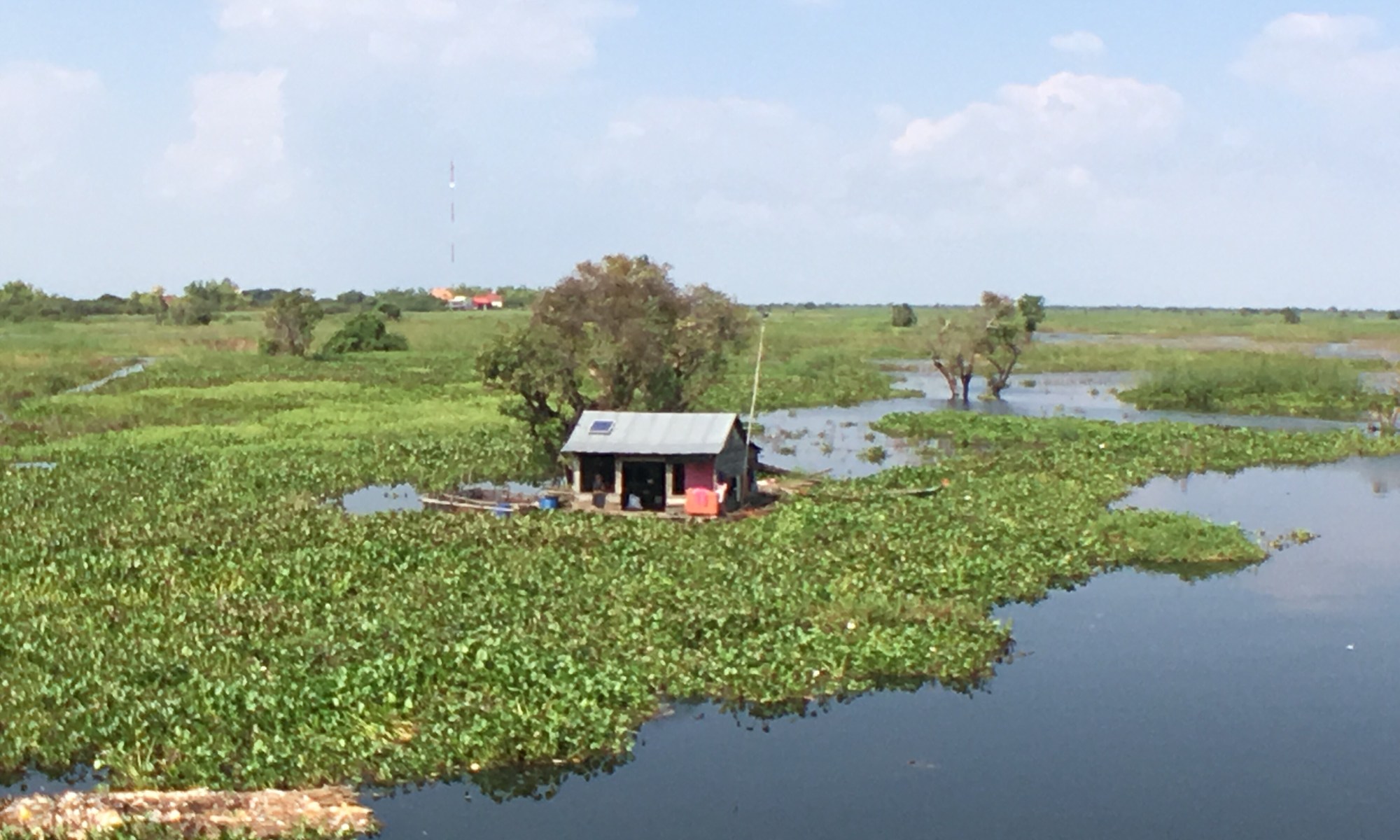
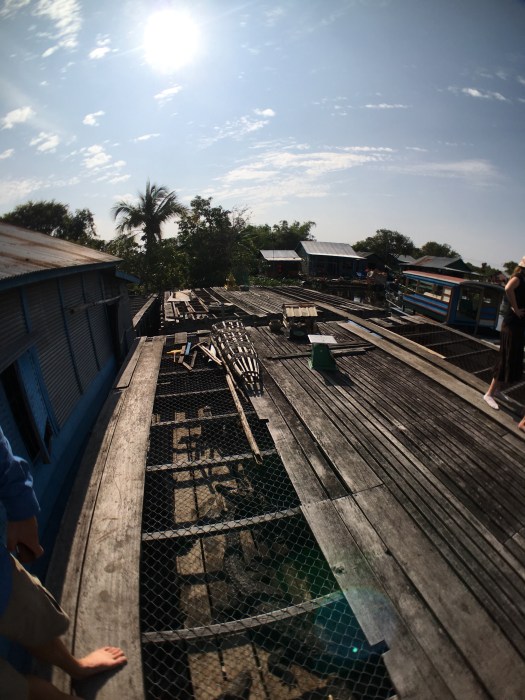
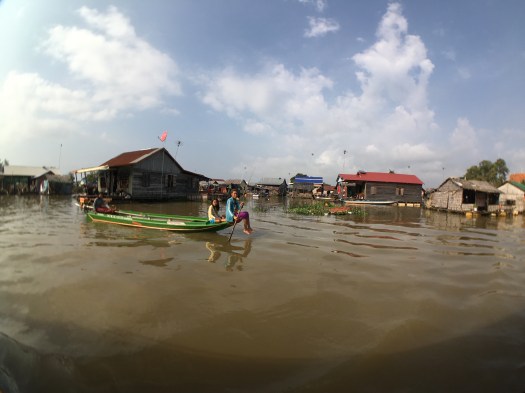
Tonle Sap Lake is SE Asia’s largest fresh water lake, fed by the Mekong and Tonle Sap rivers. As a result, this lake has been a coveted prize whose ownership has been desired for centuries. Large enough to feed a massive army and provide food for the more than 300,000 labourers who built Angkor Wat, Tonle Sap lake has been and continues to be an important food source. The lake is also home to thousands of people. Floating villages bob peacefully on the waters surface, while noisy long boats race through the watery forests carrying goods to and from the villages and small markets along the shoreline. The floating villages are home to the fishermen who make their living off Tonle Sap lake. Thousands of crocodiles, 300,000 tons of fish and 5 million water snakes per year are harvested from the lake. The people living in the floating villages must move their house up to ten times a year to adjust for changing water levels. Villages are very poor, but include all the necessities of life. Floating schools, stores, pig farms, churches, chicken coups and gardens. We had the privilege of visiting one of these villages by long boat. The village of Prek Toal. Home to 1,100 families and 10,000 people.
Not all villagers are poor. We learned that tour guides and hotel staff make about $150 USD per month. The wealthy crocodile farmers can make up to $300 USD per month. These wealthy families are few, the majority having little more than a small boat that serves as both home and livelihood.
We picked this particular tour as many of the floating villages in SE Asia have become overrun with tourists and vendors persistently hawking their goods to these same tourists. Prek Toal is a longer boat ride (I.e no bio breaks for several hours) through rougher water, discouraging many tourists from visiting. To our delight we had the opportunity to visit a floating village that exists merely for its residents and the markets that rely on the goods sold by the villagers. There were very few tourists and the town citizens went about daily life as though we weren’t present. No sad children or landmine victims tugging at your sleeve or following your every move.
Prek Toal is also unique as it is the home of Osmose Ecotours. A company that provides free education on sanitation and environmental conservation to the local villagers. They have also taught the local women the traditional art of “Saray”, or basket weaving. Weaving was becoming obsolete as more women turned to fishing as a source of income. To help conserve fish populations, provide good jobs and to help remove foreign and invasive plant species (water hyacinth), weaving was reintroduced. Women can make double the income from weaving as they can from fishing with the help of Osmose. We had the opportunity to learn this art by making a trivet. It was fun and a great way to engage with these women. Their skill is incredible, making beautiful handbags, bowls, placemats, jewelry and other goods from nothing more than dried weeds and handmade dies.
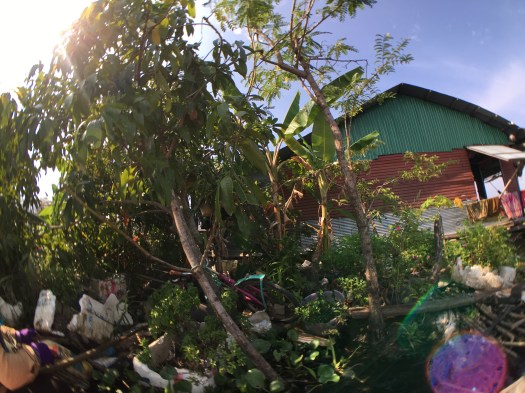
We then took a row boat to explore the local “floating” farming. Gardens, catfish farms and crocodile farms. It was amazing to see the ingenuity and simplicity of the gardens. Bamboo rafts with trees that provide “earth” to grow mango trees, herbs, banana trees and even custard apples!
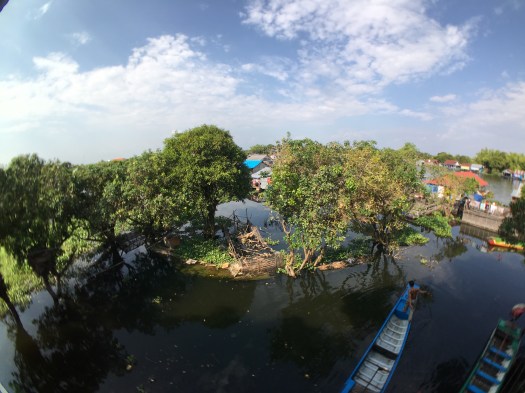
The lake is also an important bird sanctuary. Large areas are conserved for the over 200 species of birds that live there, some of which are endangered. We visited a viewing platform that gave us incredible views of the lake. The lake is dotted with trees growing out of the lake bottom a few meters below the waters surface and is covered in large islands of drifting plants.
For the first time on this trip, a tour exceeded my expectations. I highly recommend taking a day away from temple hopping to visit this genuine and very special place.
 Live Life Epic